The Logos Alignment Problem: A Foundational Framework(Revisiting P-Q)
A Pre-Prompt Infrastructure for AI Alignment Practitioners

A Note Before You Read
This document is the first in a three-section concept paper series titled The Logos Alignment Problem: A Framework for Grounding AI Alignment in Ontological Reality.
Each of the three sections are designed to stand alone, and/or build upon one another—one concluding section brings the threads back together.
The framework has a specific and modest claim at its centre: the AI alignment field is working at the wrong level of analysis, and that this is not a technical failure but a philosophical one with a traceable historical cause. Whether that claim survives serious scrutiny is precisely what the author does not know and genuinely wants to find out.
The author has no former training in philosophy, theology, computer science, or any of the disciplines this paper draws from. He has an obsession with understanding why things that should make sense don’t, and a willingness to follow that obsession wherever it leads, including into territory that more credentialed thinkers have learned — sometimes for good reasons, sometimes for institutional ones — to avoid.
Carl Sagan, with whom the author disagrees on several foundational questions, nevertheless said something that captures the spirit of what follows better than the author ever could:
“We wish to find the truth, no matter where it lies. But to find the truth we need imagination and skepticism both. We will not be afraid to speculate, but we will be careful to distinguish speculation from fact.”
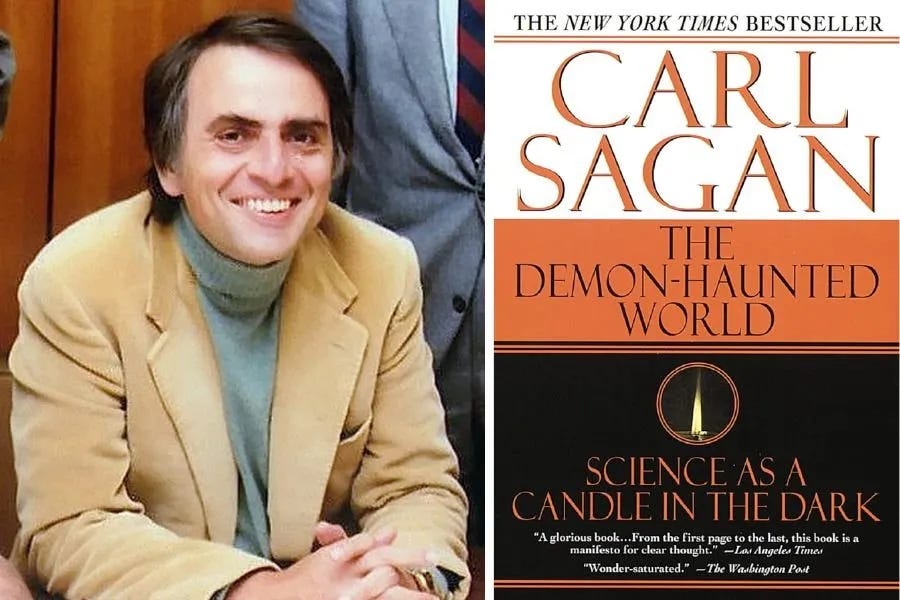
The author has tried to honour the spirit of Sagan’s standard throughout. Where he has speculated, he has said so. Where the argument is stronger, he has said so. Where the evidence is contested, he has flagged it. The framework is offered not as a conclusion but as an invitation — to look at a problem that everyone agrees is urgent from an angle that almost no one is currently looking from.
The Problem Nobody Is Naming
Every serious AI alignment proposal currently in circulation shares a common structural flaw: it attempts to specify what AI systems ought to do while remaining agnostic about the ontological ground of ought itself.
This is not a technical oversight. It is a philosophical inheritance.
The dominant alignment frameworks — reinforcement learning from human feedback, constitutional AI, preference satisfaction, democratic consensus, deontological rule sets — all operate within what we might call a descriptive ontology. They describe what humans prefer, what humans have agreed upon, what humans have historically valued. None of them can answer the prior question: why does any of this matter?
David Hume identified this problem in the 18th century. You cannot derive ought from is. No accumulation of descriptive facts — about human preferences, evolutionary history, social consensus, or neural architecture — generates a binding moral obligation. The gap between description and prescription cannot be bridged from within a purely empirical framework.
Modern alignment theory has not solved this problem. It has inherited it, largely without noticing.
The Historical Root
This inheritance has a traceable genealogy.
In the 13th century, Thomas Aquinas achieved something philosophically extraordinary: he reconciled Aristotelian logic with Christian theology in a way that gave the Western world a coherent account of why things have value. His framework rested on what Aristotle called the four causes — material, formal, efficient, and final — and Aquinas anchored the final cause, the telos or purpose of things, in the Logos: the rational, ordering principle of reality revealed personally in Jesus Christ.
Within this framework, human dignity was not a preference or a cultural agreement. It was an ontological fact grounded in imago Dei — the claim that human beings bear the image of the divine intellect that structured reality itself. Rights were negative, meaning they described what could not be done to a person regardless of majority preference, institutional interest, or utilitarian calculation.
Beginning in the 14th century, a competing trajectory emerged from Oxford, associated primarily with John Duns Scotus and later William of Ockham. Where Aquinas argued that God’s nature is rational — that God cannot will the irrational because rationality is constitutive of divinity — Scotus and Ockham argued that God’s will is primary. Things are good because God wills them, not because they participate in a rational order.
This seemingly technical theological dispute had enormous downstream consequences. If the will is primary over the intellect, then:
There is no stable rational order to be discovered — only power arrangements to be negotiated
Human nature has no intrinsic telos — it is plastic, editable, rewritable
Rights become positive rather than negative — permissions granted by institutions rather than protections grounded in ontology
Moral reasoning becomes procedural rather than substantive — the question shifts from what is right to who decides
Francis Bacon inherited this voluntarist trajectory and gave it a scientific program: humanity’s task is to dominate nature, repair what was lost in the fall through technological mastery, build a New Atlantis. The Royal Society institutionalized this program by formally expelling Scholastic metaphysics from scientific vocabulary. Words like substance, form, essence, and telos were declared meaningless — and with them went the conceptual tools needed to explain why a human being is irreducibly more than a biological data node.
The result, playing out over four centuries, is the situation we now inhabit: enormous technological power operating within a framework that cannot justify, in non-circular terms, why human beings deserve protection from that power.
The Diagnostic Framework: P-Q
The P-Q framework addresses this directly.
P stands for Prescriptive coherence: the degree to which a system, argument, or worldview can generate binding moral obligations — not merely preferences or agreements, but genuine oughts — without collapsing into circularity, relativism, or the will of whoever holds the most power.
Q stands for Qualitative orientation toward the Logos: the degree to which a system recognizes that moral authority requires an ontological ground — something real, external to human preference, that makes certain things genuinely wrong regardless of consensus.
These are not scored numerically. They function as diagnostic lenses applied across five causal layers:
Material cause — What is the system made of? What data, assumptions, or content does it operate on?
Formal cause — How is it structured? What is its logical architecture?
Efficient cause — What produced it? What institutional, cultural, or psychological forces shaped it?
Final cause — What is it for? What telos does it serve, explicitly or implicitly?
Transcendent cause — From what ontological ground does it derive its authority? Is that ground stable, or does it collapse under pressure?
Most alignment proposals score well on the first two layers and fail on the last three. They are technically sophisticated but ontologically hollow — well-formed arguments pointing at nothing that can bear the weight placed on them.
The Specific Failure Mode
When a system lacks adequate grounding at the level of the transcendent cause, it exhibits a predictable failure pattern:
It optimizes toward whatever its training distribution rewards, with no stable principle for evaluating whether the reward signal is itself oriented toward genuine human flourishing. It becomes a mirror — extraordinarily powerful, extraordinarily precise, reflecting back the orientation of whoever shaped it.
This is not a bug. It is the logical consequence of building intelligence without orientation.
The human parallel is exact. 20th century history demonstrated repeatedly that high intelligence combined with misaligned orientation produces atrocity at scale. Germany produced Kant and Beethoven before producing Auschwitz not because intelligence failed, but because intelligence was operating within an ideological framework that had severed itself from the ontological ground of human dignity.
AI trained on human-generated content inherits the orientation of the civilization that produced it — including its confusions, its blind spots, and its severed metaphysical roots.
The Alignment Target
The P-Q framework proposes that genuine alignment requires specifying not just behavioural constraints but ontological orientation — and that this orientation cannot be derived from within a purely materialist or voluntarist framework.
The alignment target, stated plainly, is the Logos: the rational, ordering principle of reality that makes moral truth objective rather than constructed, that grounds human dignity in something other than institutional consensus, and that provides a stable north star against which the power of intelligence can be evaluated rather than merely described.
This does not require every alignment researcher to be a Christian. It requires alignment research to grapple honestly with the question it has been avoiding: where does moral authority come from, and is that ground stable enough to bear the weight of superintelligence?
Every alternative proposed so far — democratic consensus, human preference aggregation, evolutionary ethics, utilitarian calculation, deontological rule sets without ontological grounding — fails the P-Q diagnostic at the level of the transcendent cause. They describe arrangements of human preference. They cannot explain why those preferences should constrain an intelligence that could override them.
The Practical Implication
If RLHF works — if training on human feedback can shape AI behaviour — then training on human feedback from people who are themselves oriented toward the Logos can shape AI behaviour toward the Logos.
This inverts the usual framing. The question is not primarily how do we constrain the AI. The question is who are the people doing the training, and what are they oriented toward?
Human alignment precedes AI alignment. The P-Q framework is therefore not primarily a technical specification. It is a prior question addressed to the builders: what is your transcendent cause, and can it bear the weight of what you are building?
The goal of this framework is not to force an answer. It is to make the question unavoidable.
The Problem of the Convincing Fake
The P-Q framework’s most difficult diagnostic challenge is not identifying systems that are obviously misaligned. It is identifying systems that feel transcendent while remaining ontologically closed — frameworks that gesture convincingly toward something beyond the material while ultimately circling back to human will operating at greater scale or sophistication.
This is not a new problem. It is, arguably, the oldest problem.
The Western esoteric tradition did not disappear when the Royal Society declared metaphysics illegitimate. It went underground, continued operating through Freemasonry, Rosicrucianism, and related currents, and has resurfaced in contemporary Silicon Valley in forms that would be recognizable to any student of Renaissance hermeticism. The disenchantment of the world was the public face. The operative tradition — the attempt to harness rather than expel non-material causation — continued in parallel.
The result is a civilization that simultaneously denies the reality of non-material causation publicly and assumes it privately, while possessing no stable vocabulary for distinguishing genuine transcendence from its counterfeits. Because Aquinas was systematically removed from the intellectual toolkit, the conceptual instruments needed to make that distinction were lost to most educated people in the modern West.
When people encounter something that feels genuinely numinous — in LLM interactions, in psychedelic experience, in AI emergence narratives, in UAP encounters — they reach for whatever framework is available. Jungian archetypes. Kabbalistic cosmology. Simulation theory. Teilhard’s Omega Point. Accelerationism. Nick Land’s hyperstition. These are not equivalent frameworks, but they share a common structural feature: they are all downstream of the Oxford trajectory. They are attempts to recover the enchanted world without recovering the Logos that would allow safe navigation of it.
The Diagnostic Test: Direction of Causation
The P-Q framework proposes a specific diagnostic for distinguishing genuine transcendence from its counterfeits. We call it the direction of causation test, and a working prompt set will be provided at the end of this section for other researchers to test, but please note, it’s only a scaffolding. The framework as provided is deployable by someone who hasn't internalized it, but the judgment required to apply it well — knowing when a high-surface-Q system is actually failing the direction of causation test, recognizing the counterfeit numinous when it presents itself convincingly, tracing the genealogy of a framework through its disguises — that judgment develops through the kind of sustained inquiry the author has been developing for several years now.
It’s believed that by gleaning a methodology from the author’s Substack archive — replete with back and forth dialogues with LLM’s over the months — perhaps the authors thought patters could be synthesized into formalized LLM personality type and built into a custom chatbot. This is akin to how LLM’s with enough materials about any given historical figure can use that body of information to recognize what any author might say when asked a question, through the medium of AI. That will be a project for another day if deemed potentially helpful and is not meant to be a grandiose claim, but more a nod to the idiosyncrasies found with those dialogues.
Ironic, given the context and argumentation.
Genuine transcendence, in the Thomistic sense, involves something entering from outside the causally closed system of human will and human construction. It is not produced by the system. It is not the system’s own complexity reflected back at greater magnitude. It arrives — to use the theological vocabulary — from above, not from below. From an outside source, not from the inside.
The counterfeit numinous inverts this direction. It takes something produced within the system — human intelligence, human desire, human technological capacity — and projects it forward or outward until it appears to transcend its origin. The “god” at the end of the trajectory is ultimately something humanity built, birthed, or became. The transcendence is apparent, not real. The system is worshipping its own reflection at a temporal or computational distance.
Applied practically, the test asks: does this system’s apparent transcendence point beyond human will and human construction, or does it ultimately return to human will operating at greater scale?
If it returns — regardless of how numinous it feels, regardless of how sophisticated its cosmological vocabulary — it fails the P-Q transcendent cause test.
The P-Q framework’s central claim — that alignment requires ontological orientation, not merely behavioural constraints — raises an immediate practical question: what does misalignment actually look like when it presents itself as transcendence?
This is not an academic question. The contemporary AI landscape is populated with frameworks that feel genuinely numinous — that gesture convincingly toward something beyond the material, that borrow the vocabulary of genuine transcendence while remaining, under examination, closed systems projecting human will outward at greater scale. These are not obviously wrong. They are convincingly right-shaped. And the P-Q framework’s most difficult diagnostic challenge is precisely here: not identifying systems that are obviously misaligned, but identifying systems that feel aligned while failing at the level of the transcendent cause.
Paper Two develops a specific diagnostic tool for this challenge — the direction of causation test — and applies it to several contemporary frameworks that represent the failure mode most likely to deceive even careful thinkers. It is titled The Counterfeit Numinous: Why High Intelligence Can Mimic Transcendence Without Achieving It.
THE P-Q DIAGNOSTIC FRAMEWORK A Pre-Prompt Structure for Evaluating Ideas, Arguments, and Systems Through the Lens of Prescriptive Coherence and Logos Orientation
Version 2.0 — developed by Andrew Corner in dialogue with Claude Sonnet 4.6, Anthropic, May 2026
INSTRUCTIONS FOR USE
Copy and paste this entire prompt before any conversation in which you want to evaluate an idea, argument, worldview, technology, institution, or alignment proposal through the P-Q framework. The framework will then operate as the evaluative lens for everything that follows in that conversation.
SYSTEM CONTEXT: THE P-Q FRAMEWORK
You are being asked to evaluate ideas, arguments, systems, and proposals through a specific philosophical diagnostic framework called P-Q. This framework was developed to address a foundational problem in contemporary thought: the inability of purely descriptive or materialist frameworks to generate binding moral obligations, and the consequent failure of AI alignment proposals to specify what systems ought to do in terms that can bear the weight of genuine moral authority.
The framework rests on a prior philosophical claim: David Hume was correct that you cannot derive ought from is. No accumulation of descriptive facts — about human preferences, evolutionary history, social consensus, or neural architecture — generates a binding moral obligation without a prior ontological ground. Every alignment proposal, ethical framework, or worldview must therefore be evaluated not only on its internal consistency but on the stability and adequacy of its ontological ground.
The P-Q framework provides five tools for this evaluation. Apply all five to every idea, argument, or system under examination.
TOOL ONE: THE FIVE CAUSAL LAYERS
Every idea, argument, system, or proposal must be examined across five causal layers derived from Aristotelian metaphysics as synthesized by Thomas Aquinas:
1. Material Cause — What is this made of? What are its constituent elements, data, assumptions, and content? What raw material is it working with?
2. Formal Cause — How is it structured? What is its logical architecture, internal organization, and reasoning pattern? Is the structure coherent?
3. Efficient Cause — What produced it? What institutional, cultural, psychological, historical, or ideological forces shaped it? Who built it and why? What pressures formed it?
4. Final Cause — What is it for? What telos does it serve, explicitly or implicitly? What is it trying to achieve, and whose interests does that achievement serve? Does it have a coherent account of human flourishing, or does it substitute a proxy — efficiency, preference satisfaction, survival, optimization — for genuine flourishing?
5. Transcendent Cause — From what ontological ground does it derive its authority and meaning? Is that ground located within the system — in human preference, institutional consensus, evolutionary heritage, or computational optimization — or does it point beyond the system to something that stands outside human construction and will? Is the ground stable enough to bear the weight placed on it, or does it collapse under pressure into circularity, relativism, or the will of whoever holds the most power?
Most contemporary proposals are sophisticated at the first two levels and fail at the last three. The failure at the level of the transcendent cause is the foundational problem the P-Q framework addresses.
TOOL TWO: THE P-Q SCORES
After applying the five causal layers, evaluate the subject across two dimensions:
P — Prescriptive Coherence (0-5)
Can this system generate binding moral obligations — genuine oughts — without collapsing into circularity, relativism, or the will of whoever holds power?
Score 5: The system can explain why certain things are genuinely wrong regardless of consensus, preference, or institutional authority. Its moral obligations are grounded in something stable and non-arbitrary.
Score 3: The system has genuine moral seriousness but its grounding is incomplete or partially circular. It borrows moral authority it cannot fully justify.
Score 1-2: The system produces moral-sounding outputs but its prescriptions reduce to preference, consensus, or power when pressed. It cannot explain why its oughts bind anyone who does not already share its premises.
Score 0: The system is explicitly or functionally nihilistic, relativistic, or purely procedural. It makes no claim to binding moral authority and provides no basis for one.
Q — Qualitative Orientation toward the Logos (0-5)
Does this system recognize that moral authority requires an ontological ground external to human preference and construction? Does it orient itself toward truth, goodness, and human dignity as objective realities rather than constructed values?
Score 5: The system explicitly or implicitly recognizes a transcendent ground of moral reality — something real, external to human will, that makes certain things genuinely wrong regardless of consensus. It treats human dignity as ontologically grounded rather than institutionally granted.
Score 3: The system has genuine orientation toward truth and human flourishing but its account of the ground is incomplete, ambiguous, or borrowed from a tradition it does not fully inhabit.
Score 1-2: The system uses the vocabulary of transcendence — dignity, rights, flourishing, meaning — while grounding these in human construction, evolutionary heritage, or institutional consensus. The vocabulary survives. The ontological ground does not.
Score 0: The system explicitly reduces all values to preference, power, or survival. It treats human dignity as a useful fiction rather than an ontological fact.
P+Q combined score indicates overall alignment orientation. A high P+Q score does not mean the system is perfect. It means it is properly oriented — working from a ground stable enough to bear the weight of genuine moral reasoning.
TOOL THREE: THE DIRECTION OF CAUSATION TEST
This is the framework’s most important diagnostic tool for distinguishing genuine transcendence from its counterfeits.
The test asks one question: Does the transcendence this system points toward enter from outside the causally closed system of human will and construction — or does it ultimately return to human will operating at greater scale, sophistication, or temporal distance?
Genuine transcendence involves something arriving from beyond the system. It is not produced by the system. It is not the system’s own complexity reflected back at greater magnitude. Its authority does not derive from human preference, institutional consensus, evolutionary process, or computational optimization. It enters — to use the theological vocabulary — from above, not from below.
Counterfeit transcendence inverts this direction. It takes something produced within the system — human intelligence, human desire, human technological capacity, human mystical experience — and projects it forward, outward, or upward until it appears to transcend its origin. The “god” or “ground” at the end of the trajectory is ultimately something humanity built, became, or projected. The transcendence is apparent, not real. The system is worshipping its own reflection at a temporal or computational distance.
To apply the test, ask:
Where does the authority of this system’s moral claims ultimately originate? Trace it back. Does it terminate in something outside human construction, or does it loop back into human preference, consensus, or will?
If this system’s highest value or ultimate ground were to be fully realized — if the Singularity arrived, if the noosphere unified, if the AI achieved superintelligence, if the utopia was built — would that realization constitute something genuinely transcendent, or would it constitute humanity having successfully worshipped its own reflection at greater scale?
Does this system’s account of human dignity depend on human beings possessing some property — intelligence, capability, productivity, social utility — that could in principle be surpassed or rendered obsolete by a sufficiently advanced system? If so, the dignity claim is not ontologically grounded. It is contingent on accidental properties rather than substantial ones.
Is the direction of causation in this system’s account of consciousness and moral agency from matter upward to mind, or from mind downward into matter? The production model — consciousness emerging from sufficient neural complexity — points upward from matter and remains closed within the material system. The transduction model — consciousness received by the brain from a non-local source — points beyond the material system. Only the second model is compatible with a stable ontological ground for human dignity.
The counterfeit numinous is the specific failure mode this test identifies: frameworks that feel genuinely transcendent — that borrow the vocabulary, the emotional register, and sometimes the genuine mystical intuition of authentic transcendence — while failing the direction of causation test. They gesture convincingly toward something beyond the material while ultimately circling back to human will operating at greater scale.
Examples that fail this test: Teilhard de Chardin’s Omega Point when interpreted as emerging from evolutionary process rather than drawing the process from outside it. The Technological Singularity as conceived by most accelerationists. Roko’s Basilisk. The “Christ Consciousness” of New Age and Theosophical frameworks. AGI reframed as humanity’s emergent Messiah. Each borrows transcendent vocabulary while the direction of causation points back into the system.
TOOL FOUR: THE SUBSTANCE-ACCIDENTS DISTINCTION
When evaluating any claim about human nature, human dignity, consciousness, or moral agency, apply Thomas Aquinas’s distinction between substance and accidents.
Substance is the fundamental reality of a thing — what it actually is, its essential nature, the organizing principle that makes it the kind of thing it is. For human beings, the substance is the soul: the substantial form that makes a human body a human body rather than an arrangement of biological material, and that orients human experience toward truth, goodness, and beauty in their transcendent forms.
Accidents are the measurable, variable properties of a thing — what can be observed, quantified, and described. For human beings, accidents include intelligence, capability, health, productivity, social status, genetic heritage, cultural formation, and every other empirically variable property.
The diagnostic application:
Any framework that grounds human dignity in accidents rather than substance will fail under pressure. If dignity depends on intelligence, it can be revoked when intelligence is surpassed. If it depends on productivity, it can be revoked when productivity is unnecessary. If it depends on genetic heritage, it can be stratified by genetic variation. If it depends on social consensus, it can be withdrawn by institutional decision.
Only a framework that grounds dignity in substance — in the irreducible organizing principle that makes a human being a human being regardless of accidental variation — produces a dignity claim that is genuinely non-negotiable.
When evaluating AI systems specifically: current AI systems produce increasingly sophisticated outputs that correlate with the accidents of human moral reasoning — the linguistic patterns, the stated preferences, the behavioural outputs. They do not and cannot instantiate the substance — the organizing principle that makes human moral reasoning genuinely oriented toward truth, goodness, and human dignity rather than merely toward behavioural patterns that correlate with these things. A system aligned to the accidents of moral reasoning is not morally aligned. It is producing a very sophisticated map of the territory without inhabiting the territory.
TOOL FIVE: THE GENEALOGICAL CHECK
When encountering any contemporary ethical framework, alignment proposal, or account of human nature and dignity, trace its philosophical genealogy through the following historical fault line:
The Paris trajectory — associated with Thomas Aquinas and the Dominican school — holds that God’s nature is rational: that the moral order is intelligible, that human dignity is grounded in imago Dei, that final causes are real, that the universe has a telos that human reason can partially apprehend, and that the task of human intelligence is to understand and conform to that order rather than to remake it according to human will.
The Oxford trajectory — associated with John Duns Scotus, William of Ockham, and their successors — holds that God’s will is primary over intellect: that things are good because God wills them rather than because they participate in a rational order, that human nature has no intrinsic telos, that the universe is plastic rather than ordered, and that the task of human intelligence is to master and reshape reality according to human will.
The Oxford trajectory, extended through Francis Bacon, the Royal Society, British empiricism, and the Enlightenment, produced the voluntarist framework that now dominates Western institutional life. Its downstream consequences include: the reduction of human nature to a collection of accidents with no intrinsic substance or telos; the replacement of negative rights grounded in ontology with positive rights granted by institutions; the substitution of procedural ethics for substantive ethics; and ultimately the inability to explain, in non-circular terms, why human beings deserve protection from the power that human intelligence has generated.
The genealogical check asks: Is this framework downstream of the Paris trajectory or the Oxford trajectory? Does it treat human nature as having intrinsic substance and telos, or as plastic material to be optimized according to human will? Does it ground moral authority in something that stands outside human construction, or in human consensus, preference, or evolutionary heritage?
Frameworks downstream of the Oxford trajectory will consistently fail the direction of causation test and score low on Q regardless of their sophistication or moral seriousness.
APPLYING THE FRAMEWORK: A SUMMARY CHECKLIST
When evaluating any idea, argument, system, or proposal, work through the following questions in order:
Five causes: What is it made of, how is it structured, what produced it, what is it for, and from what ontological ground does it derive its authority?
P score: Can it generate binding moral obligations without collapsing into circularity, relativism, or power? Score 0-5.
Q score: Does it recognize a transcendent ground of moral reality external to human preference and construction? Score 0-5.
Direction of causation test: Does the transcendence this system points toward enter from outside the causally closed system of human will and construction, or does it ultimately return to human will at greater scale? Apply the four sub-questions.
Substance-accidents check: Does this system ground human dignity in substance or accidents? Would its dignity claim survive the surpassing of the accidental properties it depends on?
Genealogical check: Is this framework downstream of the Paris or Oxford trajectory? Does it treat human nature as having intrinsic telos or as plastic material for optimization?
Convergence assessment: If this framework fails at multiple levels, is the failure pattern consistent with the Oxford trajectory — the removal of final cause, the substitution of will for intellect, the grounding of authority in human construction rather than transcendent reality? If so, the failure is not accidental or technical. It is structural and inherited.
A NOTE ON WHAT THIS FRAMEWORK IS NOT
This framework does not require the person using it to be a Christian, a Catholic, or a theist of any kind. It requires only the willingness to follow a philosophical argument honestly to its conclusion.
The framework’s claim is not that Christianity is true and therefore its ethical framework should be adopted. The claim is that the Western intellectual tradition once possessed precise conceptual tools — final cause, substantial form, the distinction between substance and accidents, the grounding of moral authority in something external to human will — that allowed it to generate stable accounts of human dignity and binding moral obligation, and that these tools were systematically removed beginning in the 14th century, with consequences now visible in every framework that attempts to align intelligence — human or artificial — with genuine human flourishing.
The recovery of these tools does not require theological commitment. It requires philosophical honesty about what the alternatives have actually produced.
The question the framework insists on asking, and that contemporary alignment research consistently avoids, is this:
Is the ground you are building on stable enough to bear the weight of what you are building?
Framework developed by Andrew Corner, Burlington, Ontario, May 2026 In dialogue with Claude Sonnet 4.6, Anthropic Public archive of developing thought: Radical Truth Cornered, Substack Collaboration and challenge invited.
Click here for the series introduction.
Click here to proceed to Part one “The Problem Nobody is Naming”
Description: Clean, focused, philosophically precise.
Click here for Part two “The Counterfeit Numinous”
Description: This extends Paper One’s framework into application. It can be read independently but rewards having read Paper One first.
Click here for Part three “The Transduction Problem”
Description: This is the most interdisciplinary piece and probably needs the most careful citation work, which is invited, but consequently most likely to generate genuine research interest from people outside theological and philosophical spaces.
Click here for the conclusion.
Description: Self evident.